Over the last 2 weeks, we have been making tree houses
I have been working with Owen and henerry to give different opinions.
I think our tree house is the best because of our crazy ziplines and slide.
I enjoyed making our tree house because we did lots of building and a lot of taping. I worked with who I did because we were all at a similar stage which meant I didn't miss anything.
Wednesday, September 26, 2018

Tuesday, September 18, 2018
Do you know our natives?
Do you know our natives? If not you will now I will go in depth explaining our birds and environment.
In NZ alone, we have over 60 species of birds! that's a lot of types but we used to have 196 birds only 200 years ago. This drop is caused by humans and animals that humans introduced. Subsequently causing our species of birds to drop drastically. Notable birds include the moa and itś enemie the hasstś eagle theses are both iconic because they are some of the largest birds in the world but despite their size, the humans managed to win.
Now I have talked about our largest birds I will discuss the rest of New Zealand's nature. some of the most famous nature includes the Karori tree and the fern both beautiful nature scattered through our reserves and forests. Thousands of people are protecting our forest but the damage is already done. All we can do is protect the species we have. Itś not like we can bring them back. Or can we?
Recently there has been a surge of knowledge of how we can modify animals and possibly bring back our favorite animals like the moa, owls and more amazing species but that is still in progress. But back to my point, We have many ways to protect our species and some including opening pest-free islands and more things to let species breed up then they can be released back into the forest.
Overall we are truly starting to realize what we have done and now are trying our hardest to keep our native animals and forest alive.
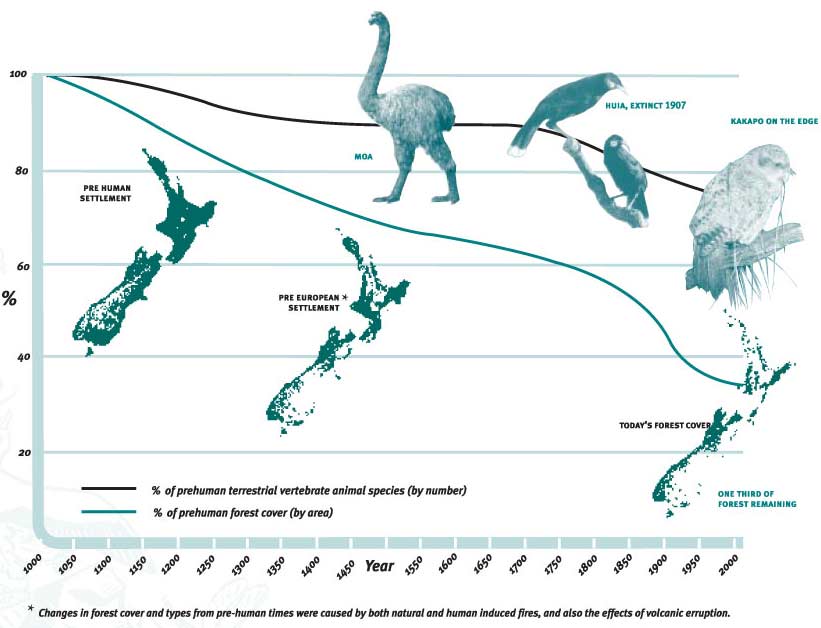
graph showing bird decline
In NZ alone, we have over 60 species of birds! that's a lot of types but we used to have 196 birds only 200 years ago. This drop is caused by humans and animals that humans introduced. Subsequently causing our species of birds to drop drastically. Notable birds include the moa and itś enemie the hasstś eagle theses are both iconic because they are some of the largest birds in the world but despite their size, the humans managed to win.
Now I have talked about our largest birds I will discuss the rest of New Zealand's nature. some of the most famous nature includes the Karori tree and the fern both beautiful nature scattered through our reserves and forests. Thousands of people are protecting our forest but the damage is already done. All we can do is protect the species we have. Itś not like we can bring them back. Or can we?
Recently there has been a surge of knowledge of how we can modify animals and possibly bring back our favorite animals like the moa, owls and more amazing species but that is still in progress. But back to my point, We have many ways to protect our species and some including opening pest-free islands and more things to let species breed up then they can be released back into the forest.
Overall we are truly starting to realize what we have done and now are trying our hardest to keep our native animals and forest alive.
graph showing bird decline
Subscribe to:
Comments (Atom)